
Industries
Aircraft Hangar Cleaning
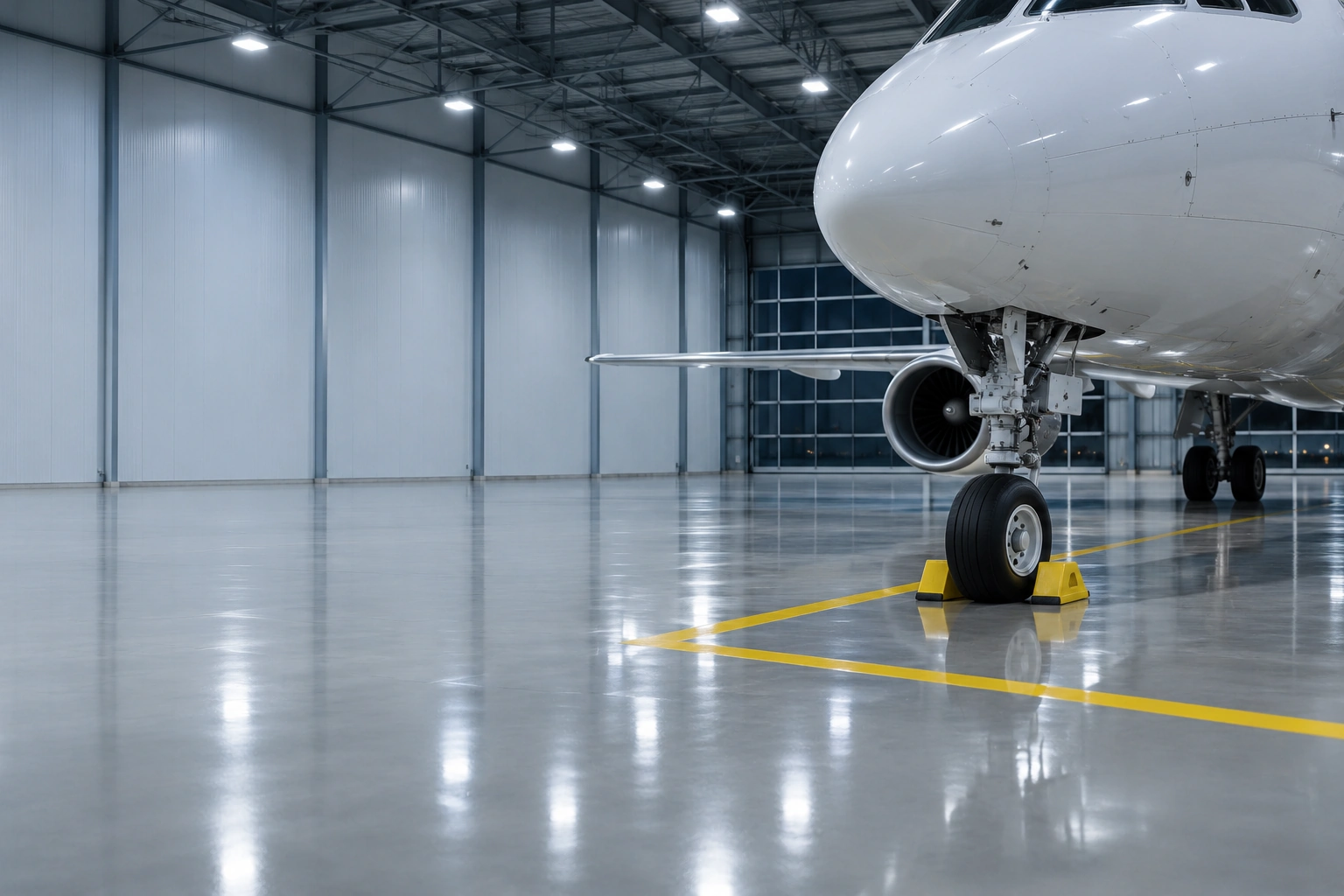
Ora Commercial Cleaning cleans aircraft hangars from the maintenance bay to the crew room, keeping grit off bay floors so a dropped washer stands out, with work timed around aircraft moves and shift changes.
A hangar that is ready when the aircraft rolls in
Ora Commercial Cleaning cleans aircraft hangars used for storage and maintenance, along with the shops, parts rooms, offices, restrooms and crew rooms built into them. The bay floor is swept and scrubbed so loose parts stand out, the support rooms get a steady janitorial routine, and every visit runs to the hangar operator’s protocol: when crews may work, which areas they enter and which water and chemicals they may use.
Whoever clears outside crews, whether a maintenance director, an aerospace facility manager or the EHS lead, sees the full task list before the first shift, room by room, with the method and frequency set for each.
Areas on a hangar cleaning plan
| Area | What crews clean | Typical timing |
|---|---|---|
| Maintenance and storage bays | Dry sweeping for grit and debris, machine scrubbing, wall bases and door tracks kept clear of trash | When the operator clears the floor, often between aircraft moves |
| Shops and parts rooms | Floors, benches the shop has cleared, sinks, trash and recycling | Nightly or on the shop’s schedule |
| Offices and planning rooms | Desks, phones and other touch points, carpet and hard floors, interior glass | Nightly or several nights a week |
| Crew rooms, locker rooms and restrooms | Fixtures, counters, showers and floors, with paper and soap restocked | Every visit, plus porter rounds on busy shifts |
| Trusses, lights and high ledges | High dusting from lifts | Periodic, once the area below is clear |
| Landside parking and entrances | Litter pickup and sweeping | On the exterior schedule |
Restrooms used by technicians all day can add a periodic restroom deep cleaning, and paper towels, tissue, soap and liners can come from Ora through janitorial supplies, so the hangar has one supplier for both.
Floors that make dropped parts easy to find
In a maintenance bay, the floor doubles as an inspection surface. Military hangar design criteria call for a light, reflective bay floor for that reason: small parts and foreign objects show up against it, and it throws more light up under the wings and fuselage. Sand and grit left on a finish like that act as an abrasive and dull it over time.
Ora dust mops or dry sweeps the bay first, then machine scrubs with the products and dilutions the hangar operator names for its coating, working around parked aircraft, tow bars and work stands in the lanes the operator marks. Scrubber recovery water goes to the drain the operator directs and never to a storm drain. Vinyl tile and carpet in the shops and offices get stripping, refinishing or extraction through commercial floor care.
Loose hardware and the clean-as-you-go habit
Stray nuts, bolts, safety wire, rags and packaging do real harm when they end up under a tire or in an engine. The FAA’s guidance on foreign object debris describes clean-as-you-go: keeping the work area tidy at the start, middle and end of every shift. Ora’s crews work that way in the bay. Cardboard, shrink wrap and packing material are bagged and carried out as each area is finished, and no bin is left to spill over.
Any hardware or tool found on the floor goes to the person the operator names, such as the shift lead, so maintenance can account for it. The written plan also spells out which areas Ora cleans and which stay with your technicians, so nothing on the floor falls between the two teams.
Working beside the fire protection system
Hangar fire protection under NFPA 409, the standard on aircraft hangars, can include foam systems, sprinklers, detectors and drainage floors. Crews keep clear of all of it. Nozzles, monitors, detectors, pull stations and control panels are never touched, tested, reset or blocked by carts, ladders or stacked supplies, and every inspection and test stays with the hangar owner and the fire protection company it hires. When a system test is on the calendar, tell your Ora supervisor and the bay visit moves to another night.
Sweeping comes before scrubbing, so grit and wrap never wash into a trench grate. Drips and small leaks on the bay floor are handled the way the operator’s spill procedure says, with dry absorbent before any water, which is the approach EPA recommends for maintenance areas. Hoses are never used to push a spill toward a drain.
Trusses, heaters and lights overhead
Dust on trusses, light fixtures, heaters and ledges sifts down onto aircraft and work stands. Ora’s high dusting reaches the roof structure from lifts, booked when the operator can clear the floor below, with the area roped off while the lift works so nothing falls on people, aircraft or a freshly scrubbed bay. The same overhead work is part of Ora’s industrial cleaning in warehouses and plants.
Hangars that open onto a ramp
A hangar on an airport sits inside the airport’s security program. The airport operator decides who may go airside, whether badges or escorts are needed and how people and vehicles move near aircraft, and Ora’s crews follow those rules alongside the hangar operator’s own. Airport cleaning covers how badging and escorts shape the work in terminals and airport buildings.
Trash leaves the hangar in tied bags and closed carts, so wind cannot lift paper or plastic onto the ramp, where it collects along fences and blows back toward aircraft.
Scheduling around the maintenance plan
Visits follow the aircraft, not the clock. Offices, crew rooms and restrooms are cleaned nightly or on the days you choose, while bay scrubbing waits for a gap between aircraft moves or a quieter shift the operator picks. A day porter keeps restrooms and crew rooms in shape through long maintenance shifts, and an Ora supervisor checks each area against the plan and reports to the contact the operator names.
Ora serves hangars and aerospace maintenance buildings across Northern California and the Reno area, including Sacramento, San Jose, Fresno, Santa Rosa and Reno.
Get a hangar cleaning quote
A walkthrough of the bay, shops and support rooms, with your hangar protocol in hand, sets the task list and the price. Every Ora cleaner is background-checked, Ora carries insurance and a bond, workers’ compensation covers each crew member, and a certificate of insurance goes into your vendor file before the first shift. Book a free hangar walkthrough. Show us the bay between aircraft moves, and we will quote floor care, shop cleaning and crew rooms around your maintenance schedule.
Common questions
Does the bay need to be empty before the floor is scrubbed?
No. Crews scrub the open floor around parked aircraft, stands and tow bars in the lanes your operator marks, then finish the rest after the next aircraft move.
Where do stray parts found during cleaning go?
To the person your operator names, such as the shift lead, so maintenance can account for every nut, bolt and tool. Hardware from the bay floor never goes in the trash.
What are the crew’s rules around our fire protection equipment?
Crews clean around nozzles, detectors, pull stations and panels and keep them clear, and a planned system test moves the bay visit to another night.
Who picks the cleaning products for our hangar floor coating?
Your hangar operator. Crews use the products and dilutions it names for the coating, and scrubber water goes to the drain it directs, never to a storm drain.
Can restrooms and crew rooms get attention during long shifts?
Yes. A day porter restocks paper and soap, empties bins and touches up restrooms and crew rooms between the nightly visits.
Services