
Commercial Floor Care Services
Periodic commercial floor care for hard flooring and carpet. Ora Commercial Cleaning treats surface buildup with scrubbing, finish care, and carpet extraction suited to the installed material.
Hard flooring and its finish
Tile and grout cleaning addresses soil in the surface and joints. Scrubbing treats compatible floors, while recoating, polishing, and burnishing provide different forms of finish care. Stripping and waxing suits floors whose finish supports it.
Carpet extraction and spot treatment
Extraction, including hot water extraction, cleans larger carpeted areas. Spot treatment focuses on individual marks; the carpet fiber and condition determine the method.
Concrete surface cleaning
We machine-scrub warehouse and showroom concrete to lift tire marks, dust and tracked soil.
Planning periodic floor work
Floors carry a building’s heaviest wear. Routine visits handle daily soil, while periodic floor care, from scrubbing and recoating to stripping and waxing, brings back the finish on hard floors and lifts embedded soil from carpet. Each treatment is matched to the installed material.
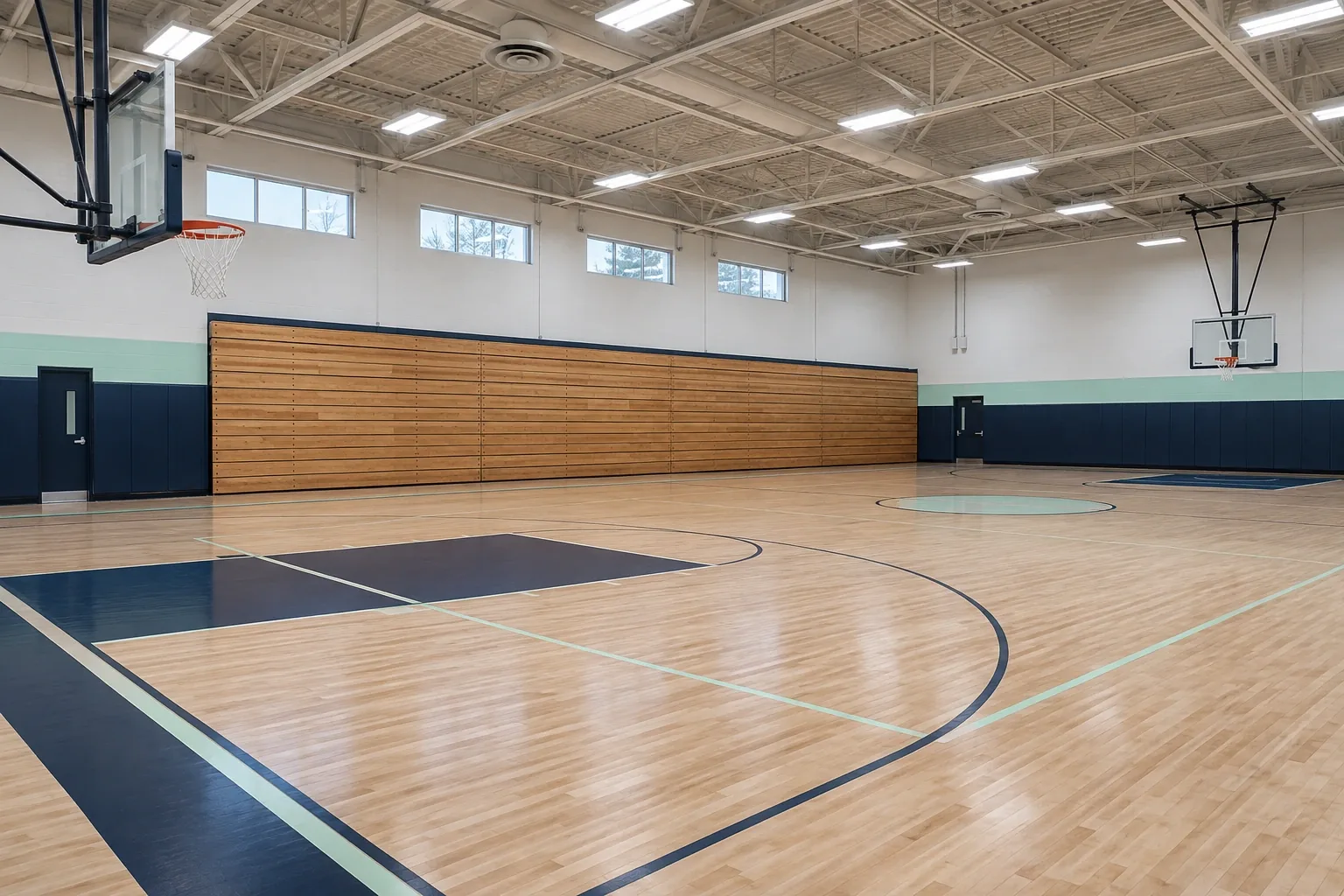
Floor care suits gym workout floors, clubhouse lounges and pro shops and dealership showrooms. Work can be scheduled after hours, so floors are ready before people return the next day. Tile and grout cleaning and concrete scrubbing round out the options for busy hard floors.
Matching the treatment to the floor
Vinyl composition tile in breakrooms and corridors is the classic candidate for strip-and-refinish work (stripping and waxing), with recoating and burnishing in between to restore shine without removing the whole finish. Porcelain and ceramic tile in a lobby respond better to scrubbing and tile and grout cleaning, while marble and terrazzo get the stone care described below. Sealed concrete in warehouses gets concrete scrubbing to lift surface soil.
Carpet in offices and corridors is kept up by vacuuming on recurring visits, spot treatment for individual stains, and periodic hot water extraction to pull out the soil vacuuming leaves behind. Fiber and backing guide how wet the process runs and how long the area stays out of use.
Polished stone in lobbies and entries
Marble and terrazzo get natural stone care of their own. Stone-safe cleaning lifts the dull film that tracked grit leaves behind, and polishing brings an even shine back to lobbies, elevator landings and entry halls.
Terrazzo in older offices and civic buildings rewards the effort, because its chips show clearly again once the surface is clean and polished. Stone work is booked after hours like the rest of our floor care, with time left for the entrance to dry before people return.
How often floors need periodic work
Traffic sets the cycle. Entrances, lobbies and breakrooms under constant foot traffic dull fastest and need burnishing or scrubbing more often than a back office. A practical plan treats the busiest hard floors on a short cycle, the rest of the building on a longer one, and carpet in main walkways more often than carpet under desks.
Signs a floor is due: a dull path down the middle of a corridor, grout lines darker than the tile, walkway carpet that looks grey even after vacuuming, or a finish that scuffs at the slightest touch. Any of these means the recurring routine has done all it can.
Scheduling around the building
Stripping and waxing takes a floor out of use while the finish cures, so it is booked for evenings, weekends or a closed day. Carpet extraction is planned so the area has time to dry before people return. In stores, offices and showrooms, that means starting after closing so the space opens on time.
Floor work runs on its own calendar alongside recurring janitorial visits, and offices from San Francisco to Reno can book it alongside their nightly cleaning. Warehouse floors pair periodic scrubbing with industrial cleaning of the working areas.
Commercial floor care pricing across our cities
Strip-and-wax and other periodic floor work is priced per square foot for each job, with a minimum charge for small areas. 2026 market pricing puts the usual band across our service area at $0.41 to $1.00 a square foot. Large, open floors in fair condition in Northern Nevada start near $0.32, while small rooms, heavy buildup or specialty finishes in high-cost Bay Area cities push a job as high as $3.00.
Consider a Modesto school or clinic with 4,800 square feet of vinyl composition tile in its corridors and waiting areas. Stripping the old finish and laying new coats at $0.55 a square foot comes to $2,640 per job. Done twice a year, that’s $5,280 annually. Scrubbing and recoating between full strips costs less per foot and stretches the time before the next strip is needed.
Condition drives the price: yellowed, built-up finish takes more passes to remove than a floor that has been maintained. Furniture the crew must move, small rooms that slow the machines and the number of finish coats you want all add time. Tile and grout cleaning, carpet extraction and concrete scrubbing are different methods with their own pricing. Night or weekend scheduling, so a store or office can stay open, costs more than a weekday evening slot, and local labor costs move the same job up or down between cities. We look at the floors on a walkthrough and set the method, schedule and price in the quote. Request a floor care quote to book that free look at your floors.
Common questions
Which hard floors can be stripped and waxed?
Vinyl composition tile and other resilient floors with a floor finish can be stripped and waxed. Stone and porcelain get scrubbing or stone care instead, and concrete is machine-scrubbed. We assess the surface first and recommend scrubbing, recoating or burnishing where that suits it better.
Can carpet spots be treated between full extractions?
Yes. Spot treatment focuses on individual marks, while extraction cleans larger carpeted areas.
What decides how often a floor gets stripped and waxed?
That follows traffic: busy corridors and breakrooms need it more often than quiet rooms, and recoating or burnishing in between stretches the time before a full strip.
What is the difference between recoating and stripping?
Recoating cleans the surface and adds fresh finish over the existing layers. Stripping removes the old finish completely before new coats go down, for floors where the finish has worn through or yellowed.
Can carpet extraction be done after business hours?
Yes. Extraction is scheduled after the space closes so carpet has time to dry before people return.
Industries
Related industries
Services