
Resources
SDS Binder Kit: A Cover, an Index and Tabs for Every Product on Site
Safety data sheets only help when someone can put a hand on the right one quickly. Our free printable adds a cover sheet, a product list and section tabs, and setting it up takes an afternoon.
Printable template
What the binder holds
An SDS binder is a single, labeled home for your safety data sheets: one sheet per cleaner, finish, degreaser or other maintenance product stored on the premises, all behind one cover. Every product a supplier ships comes with its own sheet, and over a year those sheets scatter into inboxes, closet drawers and the bottoms of delivery boxes. The binder pulls them into one place, in one order, behind a cover that tells whoever opens it what they are holding.
Count wider than the restroom shelf when you gather products. Floor finish and stripper in the maintenance room, glass cleaner at the reception desk, dish soap in the breakroom, degreaser in the shop and the touchpoint disinfectant a crew carries all belong in the set. If it lives on site and someone sprays, pours or dilutes it, its sheet goes in.
Your company’s hazard-communication program, and the person in charge of it, decide what your workplace expects from this binder; bring them in before the first sheet is filed. The kit is the filing side of the job, giving every sheet a home and a place in the order.
Start with the cover page
Someone picking up the binder wants a few answers before turning a single page, and the cover holds them. Fill in the Facility and the Building or suite, then Binder kept at, so a copy that wanders can find its way back. Binder keeper names the person who files new sheets, Copies also at lists any second binder elsewhere on the property, and Last full review shows the date the whole set was last checked against the shelves.
The keeper line matters most. A binder with nobody’s name on it slips out of date within a season, because no one feels the new sheet is theirs to file. Choose one person, write their name on the cover and give them a backup for vacations and sick days.
Build the index from a walk, not a purchase list
The product index is the page that makes the binder fast. Each row covers one product, under the headings Product name, Maker, Stored in, Used for, Sheet date and Tab. Someone looking for the floor finish reads down Product name, sees which tab it sits under and turns straight there.
Fill the index by walking the building with the sheet on a clipboard, closet by closet and room by room. Order history misses the half-used jug a past vendor left under a sink; a walk finds it. Write down what is on each shelf, then match a sheet to every line and note its Sheet date.
Write each product name letter for letter from the container label, including any number or scent the maker adds. Two products from the same maker can share most of a name and still be different formulas, so close-enough spelling sends people to the wrong page.
Any product you find without a sheet goes in the Still need a sheet box, with where it was Found in and the date it was Requested on. That short list keeps a gap from being forgotten until the sheet arrives from the supplier.
Pick one tab plan and use it everywhere
Section tabs split the binder so nobody pages through forty sheets to reach one. The kit offers three plans. Tick the one that suits your building and keep to it.
- Alphabetical, by product name: quickest for a short product list.
- Room by room: restrooms, breakroom, floor care, maintenance and exterior, so a person standing in one room finds that room’s products together.
- By product type: surface, glass, floor care, restroom and specialty, handy when the same product turns up in many rooms.
Whatever you choose, label every divider with the same word the index uses in its Tab column. A divider marked Floors next to an index that says Floor care is a small mismatch that slows someone down at the wrong moment.
Give the binder a fixed home
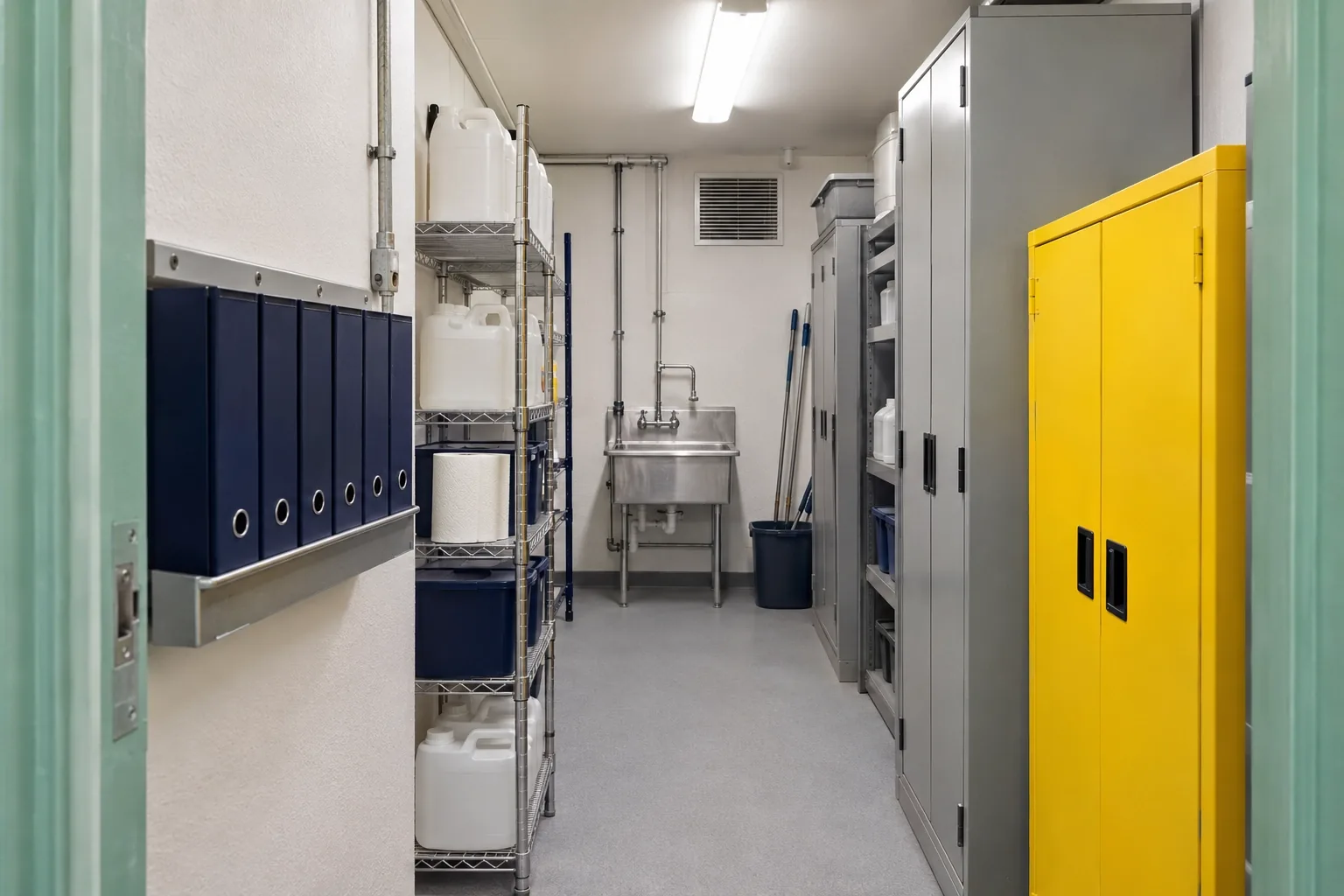
Store the binder close to the shelves and rooms where the products are used, within easy reach, and back in the same spot after every use. A shelf beside the main supply closet or a hook inside the maintenance room door both work. A building with several floors or wings can keep a copy in each one, with every location listed on the cover.
Then make sure people know the spot. Mention it when you show a new hire around, tape a note to the supply closet door and bring it up at the next team meeting; none of it costs anything, and it means the binder actually gets opened.
Keep it current as the shelves change
Sheets go stale quietly, so four moments call for a few minutes with the binder:
- Something new is delivered: its sheet is filed and its index line written before the product reaches a shelf.
- Something is used up for good or replaced: take its sheet out and draw a line through its index entry.
- A supplier sends a newer sheet: swap the old one out and change the Sheet date.
- The full review date arrives: compare every shelf with the index, then record the day under Last full review.
Pick a regular date for that full review and put it on the keeper’s calendar. A recent date on the cover tells every reader the binder can be trusted.
Where Ora fits in
Ora’s sanitizing-versus-disinfecting guide says as much: every product used in your building should have its sheet in the set, the ones our crew works with included. Ask us for those and file each under its tab like any other.
Ora’s janitorial cleaning, disinfection and sanitizing visits and supply restocking can all sit under one plan, with one contact for the building. Ask us to walk the building with you at no charge, and a written quote for the plan follows.
Common questions
What is an SDS binder for?
It puts every product sheet your building holds behind one cover, sorted by an index and tabs, so a person who needs the sheet for one floor finish or glass cleaner finds it in seconds instead of searching drawers.
Do products our cleaning crew brings go in the binder too?
File them with your own. Ask your cleaning company for the sheet for each product its crew uses on site, add a line to the index and tab it like everything else.
What if we find a product with no sheet?
List it under Still need a sheet with where it was found and the date you asked, request the sheet from the supplier or maker, and file it when it arrives.
Who files a new sheet when a delivery comes in?
The binder keeper named on the cover, or the backup when the keeper is out. The same person strikes the index line when a product leaves and runs the standing review, writing its date on the cover.
Can I edit the kit before printing it?
Yes. Next to the PDF sits a Word copy you can type into, add rows to or set up for your tab plan. Both are plain downloads.
Resources