
Industries
Power Plant Cleaning
Ora Commercial Cleaning cleans the buildings people work in at power plants and utility sites, from control buildings and offices to shops, warehouses and service centers, under the host site’s safety and access rules.
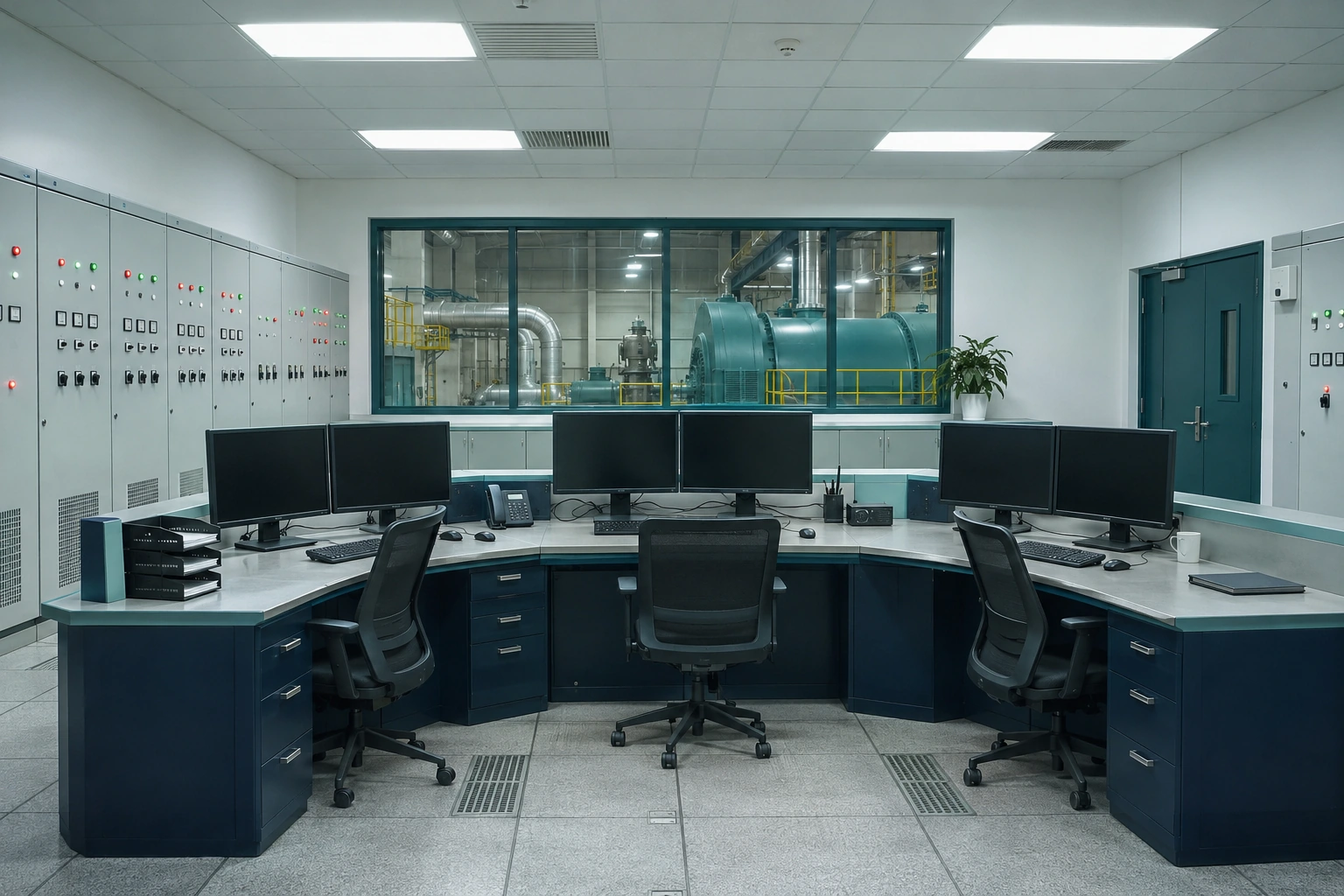
The rooms a plant runs from
A generating station is more than its turbines and switchyards. Operators work long shifts in the control building, technicians move between shops and warehouses, and utility service centers and administration offices keep the whole system staffed. Ora Commercial Cleaning keeps those buildings clean: floors, restrooms, break rooms, locker rooms, offices and the corridors between them.
The plant or utility, as host, sets the rules for where crews go and how they work. Ora’s plan starts from the host’s safety briefing and access rules, and the written task list names every room on the route.
Buildings and rooms on a plant route
| Building | What crews clean | When |
|---|---|---|
| Control buildings | Floors, desks and touch points the operators clear, break area, restrooms | Short visits at times the operators choose |
| Plant offices and administration buildings | Desks, carpet, conference rooms, kitchens and restrooms | Nightly or several times a week |
| Shops and warehouses | Concrete floors machine scrubbed, break rooms, restrooms, trash and recycling, high dusting | Between shifts or during planned outages |
| Locker rooms and wash-up areas | Showers, benches, locker fronts, sinks and floors | Every visit |
| Substation control house offices | Floors, desks and restrooms | On the host’s schedule, with its escort |
| Utility service centers | Offices, dispatch rooms, break rooms and restrooms, plus litter pickup and sweeping outside | Nightly, with exterior work on its own schedule |
Shop and warehouse floors follow the same methods as Ora’s industrial cleaning, and office tile and carpet get stripping, refinishing or extraction through commercial floor care.
Before the first shift: the host’s hazard briefing
OSHA’s power generation standard, 29 CFR 1910.269, has the host employer brief a contract employer on the installation and its known hazards before work begins. The contractor passes that briefing to its own workers, tells the host about any hazards its work brings, and reports new hazards it finds, and the two coordinate their work rules.
Ora’s plan builds that exchange in. A supervisor takes the host’s briefing and walks every cleaner through it, the host gets a list of the equipment and products the crew will bring, and anything unexpected the crew comes across goes straight to the host’s contact. Crews complete the site orientation, wear the PPE the host requires and sign in and out where it asks.
Doors marked for qualified workers
Rooms with electric supply equipment are enclosed or locked so unqualified people cannot wander in, their entrances carry warning signs, and only qualified employees may work near exposed energized parts. Ora’s route follows those signs. Crews clean the offices, corridors, break rooms and control-room floors the host opens to them, and any posted electrical room, switchyard or equipment space is entered only under the host’s rules.
Lockout tags and permit spaces
Lockout and tagout rules count cleaning a machine as servicing work. That is why crews wipe equipment exteriors only when the host confirms the machine is stopped and its own authorized staff have isolated it. A lock or tag works as a stop sign on the route: it is never removed, worked around or ignored, and no one on the crew tries to restart tagged equipment.
Tanks, vaults, pits and other permit-required confined spaces are marked with danger signs, and the host tells contractors where they are and what hazards they hold. The task list routes the crew around them.
Signing in at secured buildings
Some plant and utility buildings sit inside a security perimeter where visitors are escorted the whole time and every entry and exit is logged. Where the host’s security plan works that way, the crew signs in and out, stays with the assigned escort and books escorted work in blocks, so the host’s staff are not tied up longer than needed.
Every Ora cleaner is background-checked before being put forward for a site, keys and access cards are tracked to the person, and any change in crew is cleared with your security team before that person arrives.
Shift and outage work
Control rooms are staffed around the clock, so cleaning there is brief, quiet and timed to the moments operators pick. Offices and administration buildings take a nightly or weekly routine. Shop and warehouse floors are machine scrubbed between shifts, and the larger jobs, such as high dusting from lifts or a full scrub of a warehouse floor, are booked into the planned outages the host schedules, when the floor can be cleared.
A day porter covers restrooms and break rooms on busy days, outages included, and supervisors inspect each building against the task list and report to the host’s contact.
Start with a site walk
A walk with your facility or EHS lead, after the host’s orientation, sets the room list, the schedule and the price. Pricing follows the buildings and square footage, the number of control rooms and restrooms, escort time and how often floors and high surfaces get periodic work. Your contractor file receives Ora’s certificate of insurance; Ora is insured and bonded, and workers’ compensation covers each cleaner on site.
Ora serves plant and utility buildings in Northern California and Northern Nevada, including Sacramento, Stockton, Fresno, Santa Rosa, Reno and Sparks. Book a free site walkthrough before your next planned outage, and walk the offices, control buildings and shops with us for a written quote timed around your shifts.
Common questions
What does the crew bring to our hazard briefing?
A supervisor and a list. The supervisor attends your briefing, shares it with every cleaner, and tells your team what equipment and products the crew will bring on site.
How do you clean a control room that is never empty?
In short, quiet visits at times your operators pick. Floors, the desks operators clear and the break area are cleaned, and consoles and panels are left as they are.
Will cleaners wipe down equipment in our shop?
Yes, the exteriors you list, once your authorized staff confirm the machine is stopped and isolated. Locks and tags are never moved.
Which jobs suit a planned outage?
Work that needs a cleared floor and a longer window: high dusting from lifts, full scrubs of shop and warehouse floors, and stripping and refinishing of office tile.
Who checks the work at a plant site?
An Ora supervisor inspects each building against the written task list and reports to the contact your site names, and any crew change is cleared with your security team first.
Services