
Industries
Airport Cleaning
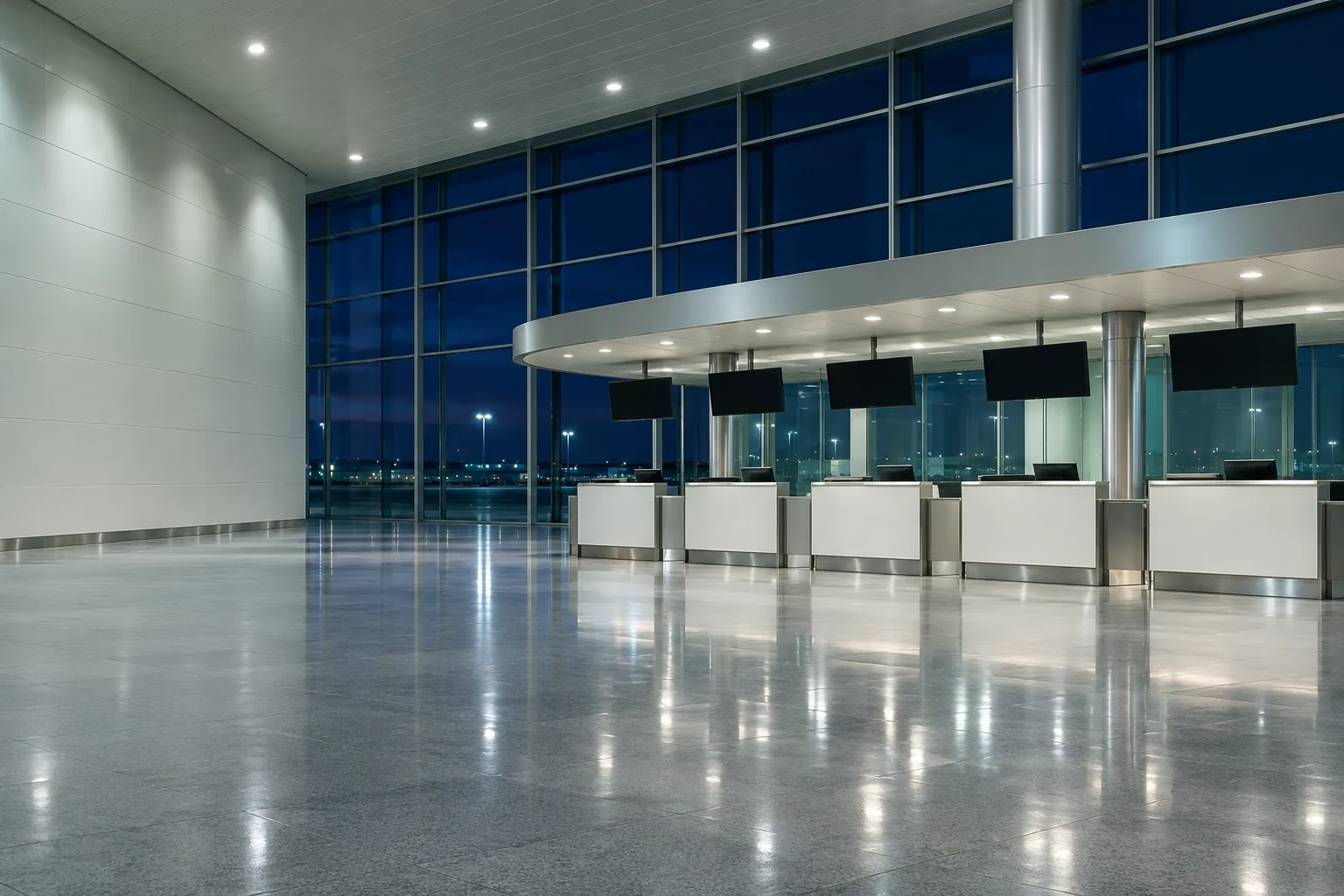
Ora Commercial Cleaning cleans passenger terminals, concourses, airport offices and cargo buildings, timing heavy work to the quiet hours and staying inside the airport operator’s security rules.
Clean terminals from the first flight to the last
Travelers judge an airport by its restrooms, gate seating and floors, and airport staff spend long shifts in the offices and break rooms behind them. Ora Commercial Cleaning cleans passenger terminals, concourses, airport administration offices and cargo and support buildings, with heavy work booked into the quiet hours and lighter rounds through the day.
Every part of the plan runs inside the airport operator’s security program. The operator decides which areas a crew may enter, who needs a badge or an escort and when work can happen, and Ora builds the schedule and the crew list around those decisions.
Cleaning across the airport campus
| Building or area | What crews clean |
|---|---|
| Ticketing halls and baggage claim | Floors, seating, entrance glass, trash and recycling, nearby restrooms |
| Concourses and gate areas | Gate seating, carpet and hard floors, counters and charging stations wiped, restrooms checked and restocked |
| Restrooms and service animal relief areas | Fixtures, partitions, floors and dispensers; relief areas wherever the airport adds them to the route |
| Airport offices and operations rooms | Desks, phones and touch points, carpet, conference rooms and break rooms |
| Cargo and support buildings | Offices, break rooms and restrooms, with warehouse floors machine scrubbed |
Gate-area carpet and terminal hard floors get periodic extraction, scrubbing and refinishing through commercial floor care, and cargo buildings with dock and warehouse space follow Ora’s industrial cleaning routine.
Security areas and what they mean for a crew
Each airport’s own security program draws the lines between its secured area, its security identification display area (SIDA), its air operations area (AOA) and the sterile area past the checkpoint, so the boundaries change from one airport to the next. Under TSA’s airport security rules, the airport operator grants unescorted access to a SIDA only after the background check and security course it requires. Anyone without that access works under escort by someone who has it, kept close enough to be watched the whole time.
Ora plans each cleaning route around the access rules and work hours your airport sets.
Litter, wind and the airfield
Paper, plastic wrap, cups and bags that escape a bin can blow onto the airfield, where they become a hazard to aircraft and the people working around them. The FAA’s guidance on foreign object debris names cabin cleaning, waste disposal and other contractors among the people with a part in preventing it, and suggests orientation that covers it.
Ora’s crews knot liners before lifting them, keep cart lids closed on the way to the compactor and empty outdoor and dock-side containers before they overfill. Where the airport’s orientation covers loose debris, crews complete it before their first shift, and anything that gets loose near an apron is reported the way the airport’s rules direct.
Restrooms and accessible routes stay in service
Federal ADA rules expect accessible features to stay in working order, with brief interruptions allowed for maintenance. Crews clean accessible stalls, sinks and dispensers on every round and refill them before they run empty. When a floor is wet or a restroom is closed for a deep clean, an accessible route and a nearby open restroom stay signed and usable.
Service animal relief areas on the route are cleaned on a set rotation alongside the restrooms around them.
Flight banks, quiet hours and porters
Terminal traffic comes in waves. A day porter follows the departure and arrival peaks with restroom checks, trash runs and spill response, while scrubbing, carpet extraction and restroom deep cleaning wait for the quiet hours the flight schedule leaves. Gates and concourse sections are worked one at a time so the rest of the terminal stays open.
Offices and cargo buildings keep their own schedule, often nightly. Terminal restrooms can draw their paper, soap and can liners from Ora’s janitorial supplies, or crews restock from your storeroom, and supervisors walk each area against the task list and report to the airport’s contact.
Pricing an airport plan
The price follows the buildings and square footage on the plan, the number of restrooms, porter hours, escort and badging time, and how often floors get periodic work. A walk with your facility team, guided by the airport’s rules, sets the task list and the quote. Ora is bonded and insured, covers its cleaners with workers’ compensation and provides a certificate of insurance before work begins, and every cleaner is background-checked before being put forward.
Ora works across the Bay Area, the Sacramento region, the Central Valley and the Reno area, including Oakland, San Jose, Sacramento, Fresno and Reno. Request a quote and pick a time to walk the terminal with us.
Common questions
Who decides which Ora cleaners can work past security?
The airport operator grants access under its own security rules, and Ora schedules the work around it. Every Ora cleaner is background-checked.
When does heavy work like floor scrubbing happen in a terminal?
In the quiet hours your flight schedule leaves. Gates and concourse sections are worked one at a time, so the rest of the terminal stays open to travelers.
How does trash reach the compactor without littering the airfield?
In knotted liners and lidded carts, on the route the airport sets, with outdoor and dock-side bins emptied before they overfill.
Will restrooms stay open during a deep clean?
One restroom closes at a time, with signs pointing to the nearest open one, and accessible stalls go back into service as soon as the floor is dry.
Can cargo buildings and airport offices share a plan with the terminal?
Yes. All of them sit on one written plan with one Ora contact, and each building keeps its own visit schedule.